Always, the soul recognizes the path long before the mind understands the journey. I didn't know the name of the temple, and I didn't know where it was — but something within me knew I wanted to go there.
Years ago, while listening to a song on YouTube, I saw images of a beautiful stone temple surrounded by the majestic mountains of India. Something about that place captured my attention. I couldn't explain it: I didn't know its history or religious significance, yet the image stayed with me.
Years passed. Then, during one of my journeys to India, an unexpected personal experience changed my plans. In that moment, I remembered the temple I had seen so long ago, and I decided to find it.
An Indian friend recognized the temple immediately.
“Pamela, that's Kedarnath,” he told me. “It's a very sacred place. Mostly Indian pilgrims go there. You don't see many foreign tourists.”
He explained that Kedarnath was high in the Himalayas and that reaching it would require a considerable journey. I had never heard of Kedarnath. I had not grown up with the tradition of Char Dham Yatra, I was not Indian, and I had never imagined myself undertaking one of India's most sacred Hindu pilgrimages.
Yet I felt drawn to go.
What I didn't know was that following this feeling would deepen my spiritual journey in ways I could never have anticipated.
What Is Char Dham Yatra?
High in the Garhwal Himalayas of Uttarakhand lies one of Hinduism's most revered pilgrimages: Char Dham Yatra. Also known as Chota Char Dham, this sacred journey connects four important Himalayan shrines: Yamunotri, Gangotri, Kedarnath, and Badrinath.
For generations, Hindu pilgrims have traveled through these mountains to offer prayers, seek blessings, and express their devotion. Each temple holds its own spiritual significance, and together the four destinations form a pilgrimage deeply rooted in Hindu faith, mythology, and sacred geography.
Traditionally, the journey follows this order:
Yamunotri → Gangotri → Kedarnath → Badrinath
The pilgrimage is more than a journey between temples. It is a living religious tradition, shaped by centuries of devotion and by the extraordinary landscape of the Himalayas. For many Hindu devotees, completing Char Dham Yatra is a lifelong aspiration.
For travelers encountering these traditions for the first time, it offers an opportunity to learn about India's spiritual heritage while approaching its sacred places with humility and respect.
Yamunotri — The Sacred Presence of Goddess Yamuna
Yamunotri, traditionally the first destination of the pilgrimage, is dedicated to Goddess Yamuna. The shrine stands amid dramatic mountain scenery and is associated with the sacred Yamuna River, which holds an important place in Hindu tradition.
Goddess Yamuna is revered in connection with purification, protection, and spiritual blessings. The final approach to the temple involves a mountain journey, reminding pilgrims that reaching a sacred destination often requires patience and determination.
Gangotri — The Sacred Waters of Goddess Ganga
Gangotri is dedicated to Goddess Ganga, the divine personification of the Ganges River. According to Hindu tradition, the Ganga descended from heaven to Earth, and Lord Shiva received her powerful waters in his matted hair to soften their descent.
The temple stands beside the Bhagirathi River, one of the principal headstreams of the Ganges, and the glacier associated with the river's source lies farther upstream at Gaumukh. For countless devotees, the Ganga represents purification, renewal, and a sacred connection between humanity and the divine.
Kedarnath — In the Sacred Mountains of Lord Shiva
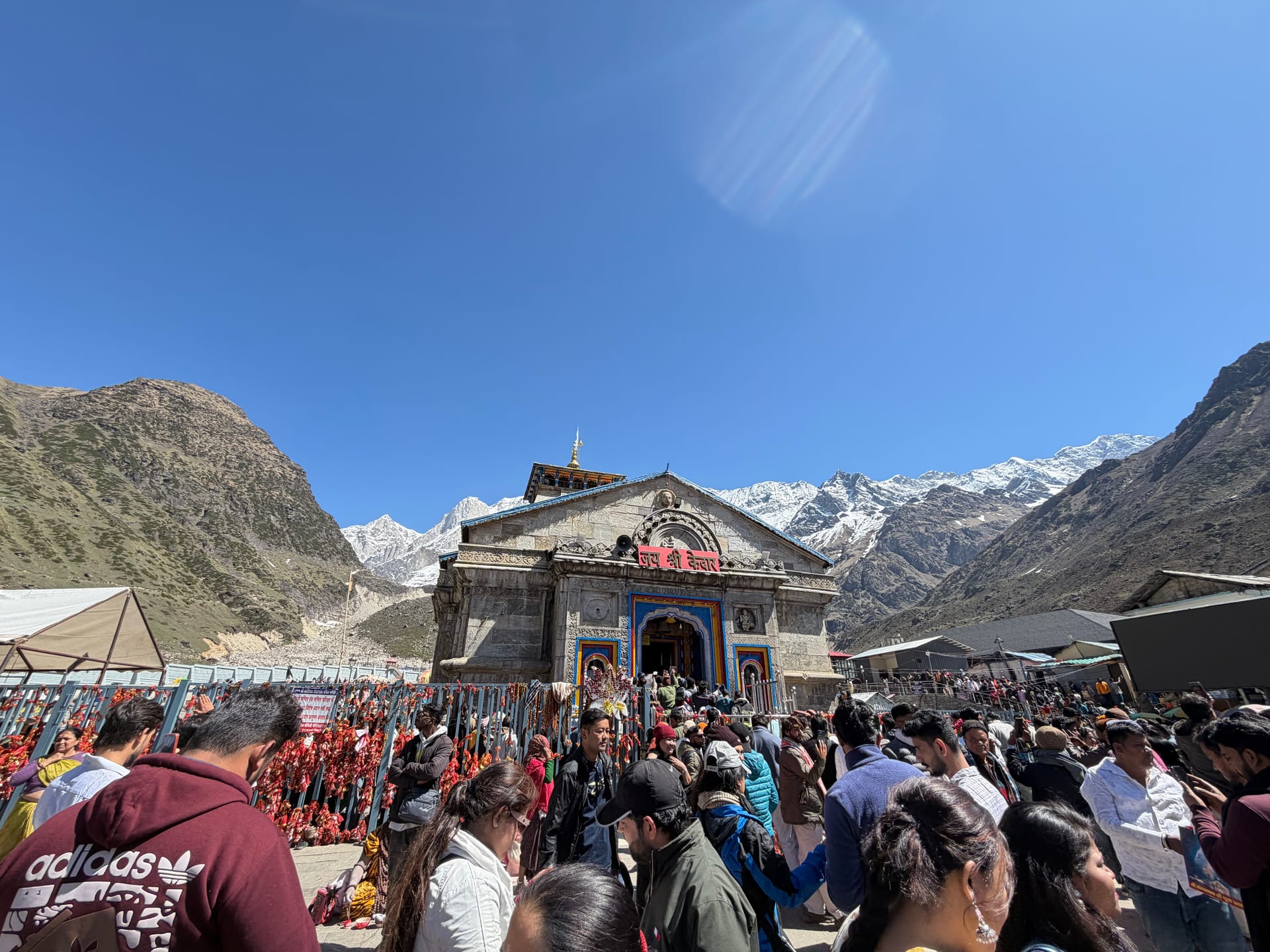
Kedarnath is one of the twelve revered Jyotirlingas dedicated to Lord Shiva. Situated approximately 3,583 meters above sea level, the ancient stone temple stands in a spectacular Himalayan valley, surrounded by towering peaks.
Its religious traditions are associated with the Pandavas of the Mahabharata and the spiritual legacy of Adi Shankaracharya. Kedarnath is a place of profound devotion, where the physical effort of the journey is often considered an important part of the pilgrimage itself.
For me, it would become much more than a destination.
Badrinath — The Sacred Abode of Lord Vishnu
Badrinath is dedicated to Lord Vishnu in his form as Badrinarayan. Located beside the Alaknanda River, the temple is surrounded by magnificent Himalayan landscapes, and according to Hindu tradition, Lord Vishnu performed deep meditation in this sacred region.
Badrinath is also one of the four destinations of the wider, pan-Indian Char Dham pilgrimage, a different sacred circuit from the Himalayan Chota Char Dham, and it is traditionally the final temple visited on the Himalayan pilgrimage.
Although I have personally visited Kedarnath and Badrinath, I have not yet visited Yamunotri or Gangotri. My own story begins with Kedarnath.
The Road to Kedarnath — Following an Inner Calling
My journey began in Rishikesh, the spiritual town on the banks of the Ganges River. From there, I traveled by taxi toward Sonprayag, following winding mountain roads through the breathtaking landscapes of Uttarakhand. The journey was long, and I began to understand that reaching Kedarnath was not like visiting an ordinary destination.
From Sonprayag, pilgrims generally continue by regulated local transport to Gaurikund, approximately five kilometers away, where the mountain trek begins. The trek to Kedarnath is approximately 16–18 kilometers, depending on the route and current arrangements, and pilgrims have different ways to make the ascent according to their physical abilities, needs, and the services available during the pilgrimage season.
Some choose to walk; others use horses or mules. Traditional palki or dandi services allow pilgrims to be carried in a seated palanquin by a team of porters, while kandi or pithu services involve a porter carrying a child or lighter passenger in a supported basket or carrying arrangement. Authorized helicopter services may also be available, depending on weather, operating conditions, and local regulations.
I had alternatives. But I chose to walk.
I wanted to experience the pilgrimage step by step, to understand what it meant to spend hours climbing through the Himalayas toward a place that had been calling me for so long. The path was demanding: there were steep sections, changing mountain conditions, and moments when exhaustion made every step more difficult. Around me, pilgrims expressed their devotion to Lord Shiva with the familiar chant:
Har Har Mahadev!
I was surrounded primarily by Indian pilgrims who had come from different places to undertake this sacred journey, and during that first visit I encountered very few foreign travelers. I was experiencing a religious tradition that had not been part of my upbringing, yet something about the journey felt deeply meaningful to me.
I didn't know it then, but one of the most important moments of my pilgrimage would happen before I reached the temple.
An Unexpected Meeting with Kedargiri
After hours of climbing, I became exhausted and stopped to rest on a bench beside the mountain trail. Across from me sat a sadhu named Kedargiri — a Hindu ascetic devoted to spiritual practice, often through meditation, renunciation, and religious discipline.
Kedargiri was sitting beside his dhuni, a sacred fire associated with the spiritual practices of many Hindu ascetics. Our eyes met, something encouraged me to approach him, and I asked whether I could sit beside him. He welcomed me, and we began to talk.
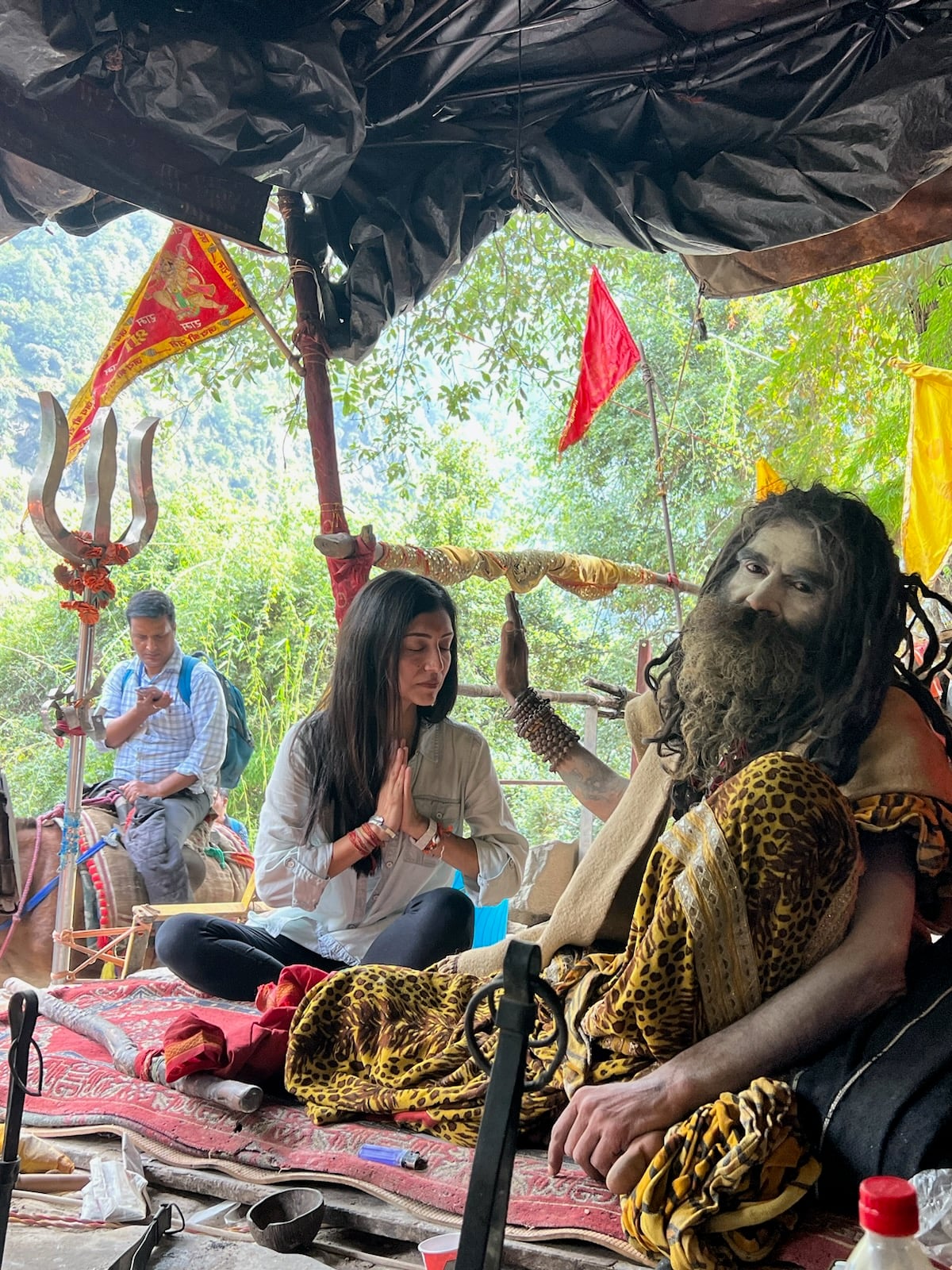
I had not planned this meeting; I had stopped because I was tired. Yet that simple moment became one of the most meaningful encounters of my spiritual life. During our time together, Kedargiri placed sacred ash, known as vibhuti or bhasma, on my forehead. In traditions devoted to Lord Shiva, sacred ash carries profound symbolism associated with impermanence, spiritual reflection, and devotion.
When it was time for me to continue walking, Kedargiri looked at me and said: “I'll see you next year.” I smiled and replied: “Maybe. I don't know yet.” But he answered: “See you soon, Pamela Devi.”
We exchanged WhatsApp contact information, and I continued toward Kedarnath. At that moment, I had no idea how deeply those words would become part of my life.
“See you soon, Pamela Devi.”
The Meaning of Devi — A Recognition Beyond Words
In Sanskrit, Devi means “goddess” or “divine feminine.” In Hindu traditions, the word is closely associated with the sacred feminine and with Shakti, the divine feminine power, and it can also be used as a respectful form of address for women.
But for me, being called Devi by Kedargiri beside his sacred fire became something whose meaning would unfold over time. As my spiritual journey deepened, I began to understand his words differently. I came to believe that, in that brief encounter, he had recognized something within me that I was still learning to recognize in myself — something beyond my nationality, appearance, or the circumstances that had brought me to India. Something connected to the sacred essence of who we are.
I cannot know exactly what he saw or intended in that moment, but I know that his words stayed with me, quietly acquiring meaning as the years passed.
And our connection did not end on that mountain trail. Every year, when I return to Kedarnath, I visit Kedargiri, sit beside him at his dhuni, and we talk. The place where two strangers first met has become a familiar and deeply meaningful part of my pilgrimage.
I often think about that first encounter and the woman I was then. He called me Devi long before I understood what those words would come to mean in my own spiritual journey. Some encounters touch our lives long before we understand the depth of their meaning.
My First Arrival at Kedarnath
After more than eight hours of trekking, I finally reached Kedarnath. It was already nighttime and the temple had closed for the evening. I was physically exhausted, so I found a simple place to stay near the temple and rested.
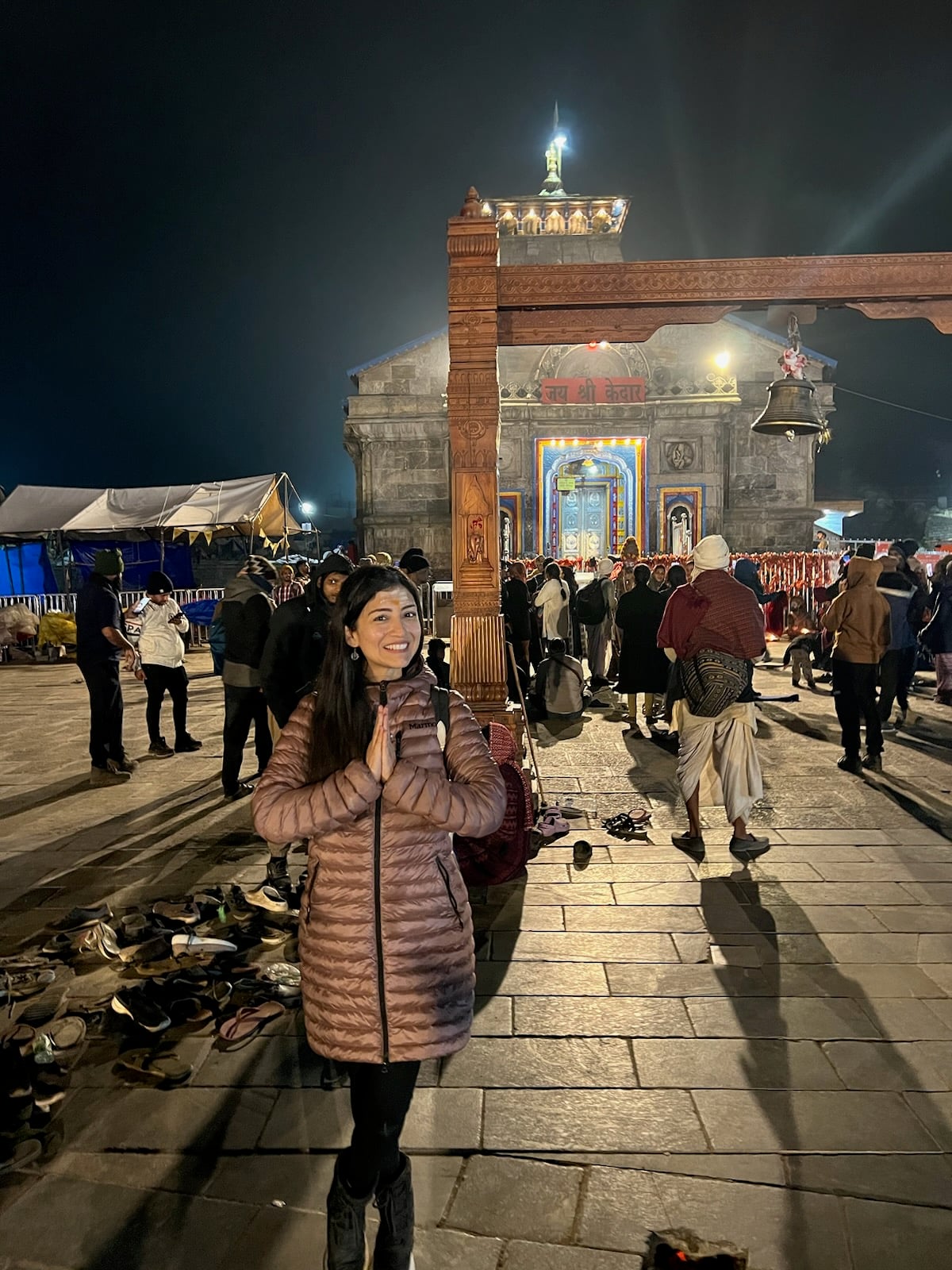
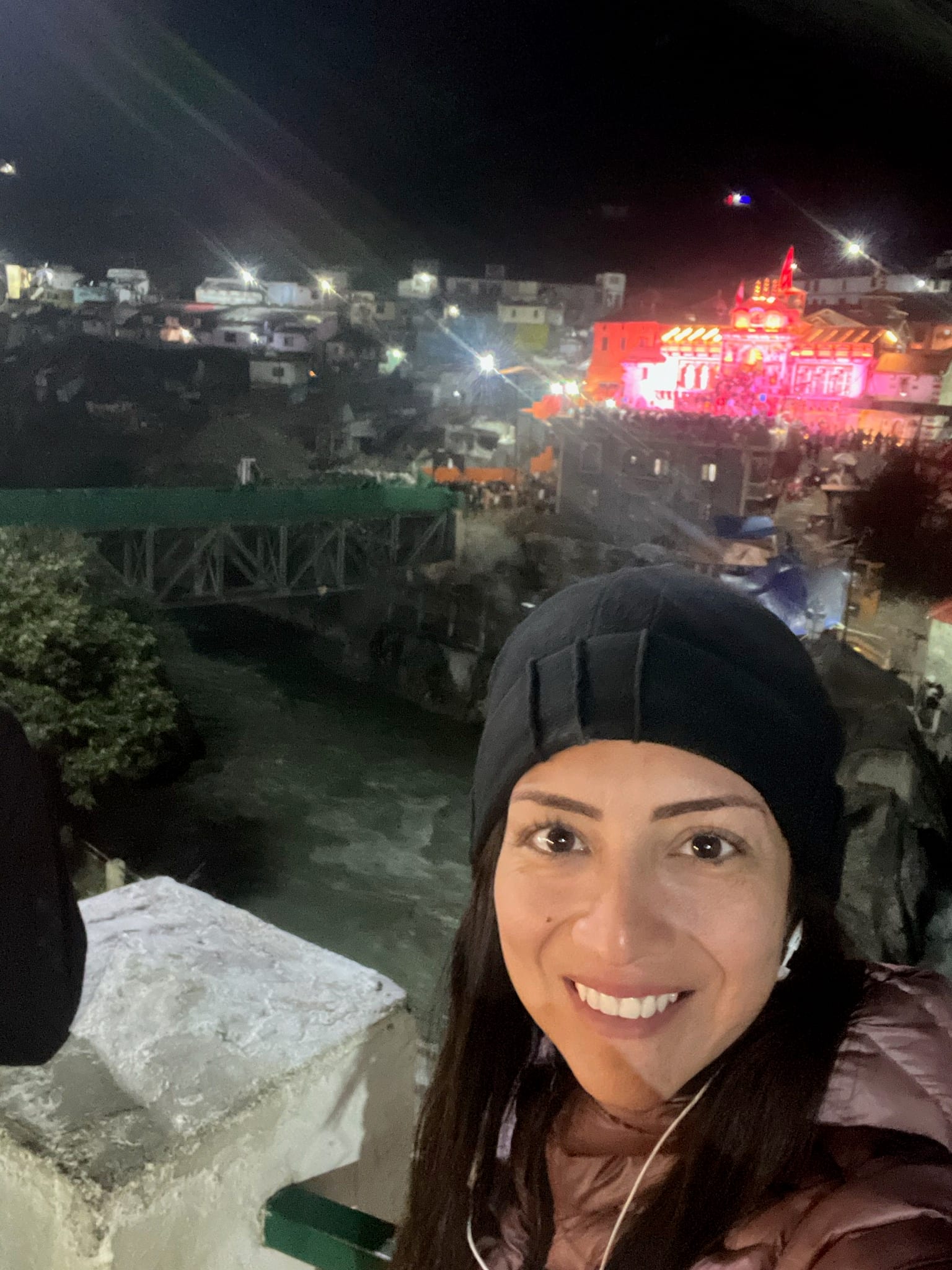
The following morning, I woke early and joined the line of pilgrims waiting to enter. There were already many people gathered, and I stood among devotees who had traveled from different parts of India, each carrying their own prayers, hopes, and reasons for making the pilgrimage.
I had not come expecting comfort or luxury. I had come because something within me had drawn me to that place — and there I was, standing before the temple I had first seen years earlier in a video. The temple whose name I hadn't known. The temple I had decided to visit before understanding the journey it would require.
I had finally reached Kedarnath. But the deeper meaning of that experience was only beginning to unfold.
From Kedarnath to Badrinath
After my visit to Kedarnath, I continued to Badrinath. Visiting Badrinath allowed me to experience another extraordinary part of India's sacred Himalayan heritage. Both temples hold immense religious significance, and I feel fortunate to have experienced them personally.
Yet my connection with Kedarnath was different. It was the place I had felt drawn toward without knowing its name, where I had met Kedargiri, and where an unexpected journey had begun to reveal a deeper meaning in my life.
Badrinath became part of my pilgrimage, but Kedarnath became part of my life.
Badrinath became part of my pilgrimage, but Kedarnath became part of my life.
Kedarnath — A Journey Deeper Within
India had already changed my life in many ways, but Kedarnath took my spiritual journey to a depth I had never experienced before. What began as an unexplained attraction to a temple became something far more meaningful than I could have imagined. I had followed an inner calling without knowing where it would lead. I didn't have all the answers, and I couldn't explain why I felt so strongly drawn to that place — I simply trusted what I felt in my heart.
Looking back, I realize that Kedarnath was not only a destination in the Himalayas. It became an important part of my spiritual awakening, deepening my connection with faith, with the divine, and with the person I was becoming. My encounter with Kedargiri, the long climb through the mountains, and the years of returning to that sacred place have all become part of a journey that continues to unfold within me. Each return brings me closer to a deeper understanding of myself and my spiritual path.
And with time, I have come to appreciate that some of life's most meaningful experiences cannot always be explained through logic alone. Sometimes, we feel drawn toward something before we understand why. We spend so much of our lives listening to our thoughts, searching for explanations, and trying to control what comes next — yet there are moments when our hearts quietly guide us toward something we cannot fully comprehend.
I believe that when we learn to listen to that inner voice, with faith, humility, and an open heart, we may discover a path that brings us closer to our true selves and to the divine presence within our lives. I share my experience not because I believe everyone must follow the same spiritual path, but because I hope it encourages others to trust their own journey: to listen a little more deeply, to make room for the quiet wisdom of the heart, and to remain open to the possibility that what calls us today may reveal its meaning only years later.
From Curiosity to Gratitude, From Gratitude to Devotion
The first time I traveled to Kedarnath, I went because I wanted to understand why I had felt drawn toward that temple for so many years. I went out of curiosity. The following year, I returned for a different reason: I wanted to express gratitude. What had begun during a difficult period of my life had ultimately become an unexpected blessing.
Then I returned again. And again. Today, I return to Kedarnath every year.
Each visit is an opportunity to reconnect with my faith, reflect on my spiritual path, and renew something deeply meaningful within myself. The woman who first climbed those mountains is no longer the same woman I am today. My understanding of life has continued to evolve, and Kedarnath remains an important part of that transformation.
I first went to Kedarnath out of curiosity. I returned with gratitude. Today, I return with devotion. And perhaps the greatest lesson this journey has taught me is this:
Always, the soul recognizes the path long before the mind understands the journey.
An Ancient Indian Pilgrimage — A Calling Beyond Borders
Char Dham Yatra is a sacred Hindu pilgrimage, deeply rooted in the religious traditions and spiritual heritage of India. Its temples are not simply beautiful monuments: they are active places of worship, where generations of devotees have expressed their faith. That heritage deserves to be approached with humility, understanding, and respect.
But my own experience taught me something I had never expected. I was not born in India, I had not grown up hearing stories about Kedarnath or dreaming of completing a Himalayan pilgrimage, and I didn't even know the name of the temple that had captured my attention. Yet I felt called to go — and I followed that feeling.
I believe that sacred places can sometimes touch the hearts of people who come from entirely different backgrounds. This does not mean that every visitor will experience the same spiritual transformation; each person's journey is different. But sometimes, a place speaks to us before we know its history. Sometimes, curiosity becomes the beginning of understanding. And sometimes, when we approach a spiritual tradition with an open heart and genuine respect, we discover something meaningful within ourselves.
I hope my story encourages others to listen to their intuition — not to abandon reason or practical judgment, but to recognize that our hearts can sometimes draw our attention toward experiences we have not yet learned to understand. We do not always need to know every answer before taking the first step. Sometimes, the meaning becomes clearer through the journey itself.
When Is the Best Time to Visit Char Dham Yatra?
The Himalayan Char Dham pilgrimage is seasonal because of the region's high altitude, snowfall, and changing mountain conditions. The temples generally open during spring, around April or May, and close during autumn, usually around October or November. Exact dates are announced each year.
- May and June: Popular pilgrimage months, often with significant crowds.
- July and August: The monsoon season brings increased risks of heavy rainfall, landslides, and road disruptions.
- September and early October: Depending on weather and local conditions, this period may offer opportunities to undertake the pilgrimage after the monsoon.
Visitors should confirm official temple opening dates, pilgrimage registration requirements, transportation arrangements, and current safety conditions before traveling. The Kedarnath trek is physically demanding, and the high altitude requires appropriate preparation. The Himalayas offer extraordinary beauty, but they also deserve profound respect.
Why I Am Opening This Journey Through Soul India Journeys
When I first traveled to Kedarnath, I never imagined that one day I would create Soul India Journeys. I was simply following something I felt deeply within my heart. Over time, my experiences in India inspired a desire to share its extraordinary culture, sacred traditions, and meaningful journeys with others.
Today, as I begin this new chapter with Soul India Journeys, offering a Char Dham Yatra program has a particularly personal meaning. For me, it is more than adding another destination to a collection of journeys — it is opening a door. A door for people who may feel drawn toward the Himalayas but do not know where to begin, for travelers who are curious about India's spiritual traditions, for those who wish to experience this pilgrimage with respect for its religious heritage, and perhaps for someone who, like me, once saw an image of a temple and felt something they could not explain.
I cannot promise that this journey will transform another person's life. Spiritual experiences cannot be guaranteed or repeated in exactly the same way. But I can share what this pilgrimage has meant to me and offer others the opportunity to discover what it may mean to them.
I believe that some journeys begin long before we purchase a ticket or take our first step. They begin with a quiet feeling, a question, an image we cannot forget, or an inner calling that stays with us until we are ready to listen.
If the Himalayas have been calling to you, perhaps this is your invitation to explore why.
Explore Char Dham Yatra with Soul India Journeys
Discover the sacred Himalayan temples of Yamunotri, Gangotri, Kedarnath, and Badrinath through a journey that honors India's living spiritual traditions.
Soul India Journeys — Explore. Restore. Transform.